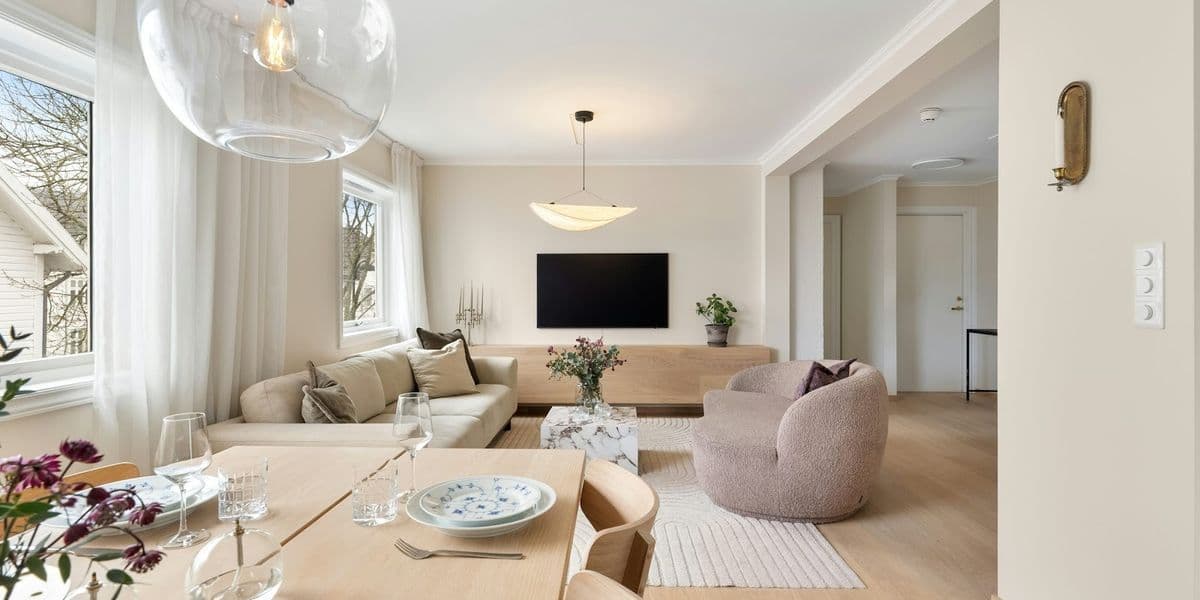
There is a fine but enormous difference between being 'nicely furnished' and truly feeling at home. Between a sofa chosen in a hurry and a living room that breathes, keeps you close to the light, preserves your calm, and supports your routine day after day. If you have ever felt that a room 'does not come together,' I wrote about this in more detail in the article "How to fix a room that does not come together".
If you are in Targoviste or in Dambovita County and you are thinking about a interior design for an apartment, a house, or a commercial space, choosing the right designer is the first step in the right direction. And sometimes the step that saves you from the most costly 'improvisations.'
When you need an interior designer in Targoviste
Why it is worth choosing carefully (even before style)
Renovations and interior projects have a special way of testing your patience and budget. A useful benchmark: in 2023, nearly 2 in 5 homeowners (39%) exceeded their renovation budget, according to Houzz. It is not a reason to fear but a reason for clarity: the right questions asked at the start reduce surprises along the way.
And there is something else, very relevant for Romania: spaces are often 'too full' for how many needs we have. That makes interior design not just about aesthetics, but about optimization, proportions, circulation, storage, and light.
'Nicely furnished' vs. a coherent interior design project
'Nicely furnished' often comes from inspiration: you save images, buy pieces you like, and try to 'tie them together.'
A coherent interior design project starts the other way around: from your life, from measurements, from functions, from light, from the rhythm of the home, and only then reaches objects, textures, and colors.
A good sign is how the designer talks to you about the process. The industry has clear staged frameworks precisely to reduce ambiguity and define deliverables (for example, the staged structure in RIBA Plan of Work, widely used). You do not need to know these stages by heart, but it is important that someone translates them for you.
What you should receive concretely (so it is 'ready to implement')
When you say 'I want interior design,' ask yourself: what stays in my hands after the meetings? Ideally, you receive documents and decisions that help you implement without improvisation. If you are in this phase, the article "The no-regrets checklist: how to choose finishes you will not hate in 12 months".
Here are the deliverables worth discussing (and clarifying in the offer/contract):
1) As-built survey / on-site measurements
As-built survey = exact measurement of the space, with positions of doors, windows, columns, installations, and real dimensions. It is the foundation of the project. Without it, any plan is 'approximate.'
2) Furniture plan + circulation
This is where real frustrations get solved: a 'long' living room where you do not know where to put the table, a bedroom where the bed blocks access, a narrow hallway that becomes storage. A good plan clarifies proportions and flow before you buy anything.
3) Visual concept (moodboard) and material direction
Not just 'what is beautiful,' but what fits your identity: color temperature, textures, rhythm, contrast, how calm or how vibrant you want home to feel.
4) Lighting plan / electrical plan (if applicable)
The lighting plan defines fixture types and scenarios (ambient, accent, task). The electrical plan positions outlets and switches in line with furniture and daily use. It is the difference between 'it would look good' and 'it is easy to live in.'
5) Finish and product list (with alternatives)
A coherent selection, with options depending on budget and availability, so you are not blocked by a single product.
6) Indicative estimates and procurement calendar
Not every project includes detailed cost estimates, but there should be a mature conversation about budget, priorities, and pace. Houzz data shows how easily finances can drift when things stay 'up in the air' (source).
Selection checklist: how to tell whether the designer is right for you
When you search for 'interior designer Targoviste,' it is tempting to choose only by style. Style matters, but compatibility shows up especially in the process.
Portfolio: look for logic, not just images
- Do projects 'flow' visually from one room to another?
- Do you feel the balance between aesthetics and functionality?
- Are there residential and/or commercial examples relevant to your need?
Process: ask what collaboration looks like, step by step
A good designer can clearly explain the project stages: from measurements and plans to material selection and implementation.
Communication: pace, feedback, decisions
- How often do you communicate?
- How are purchases approved?
- What happens when you change your mind (and it is normal that you do)?
Budget: transparency and priorities
There is no magic: there are choices. The right designer helps you prioritize, achieve a coherent result, and avoid purchases that 'do not connect.'
Local: measurements, coordination, teams
In projects for interior design from Targoviste matters a lot on the practical side: site visits, on-site measurements, collaboration with local teams, delivery coordination. Ask directly how implementation is managed and what is expected from you.
10 questions to ask at the first meeting (without sounding like an interrogation)
Choose the ones that fit you and put them simply, humanly:
- What is your process, stage by stage, and what deliverables do I receive at each stage? (a framework like RIBA helps exactly here)
- What does the design package include and what does it not include?
- How do you measure the space and make sure the plan matches reality?
- How do we define the budget: by rooms, by categories, by priorities?
- How do you estimate budget overrun risks and how do we prevent them? (especially since overruns are common, cf. Houzz)
- How many projects do you have at once and what is the realistic timeline for mine?
- What does a revision look like: how many rounds of feedback are included?
- Who coordinates implementation and communication with the teams (painters, electricians, custom furniture)?
- When does it make sense to buy and when is it better to wait? (so you do not end up with 'beautiful pieces' that do not fit the plan)
- What are 2-3 risks specific to my space (light, proportions, storage) and how would you address them?
Red flags that should stop you (at least for clarification)
Not for drama, but for your protection:
- 'We will stay in touch' without a clear purpose (what you receive, when, in what format).
- Unexplained fees or commissions.
- Purchases made without approval.
- Deadlines that are 'too good to be true.'
- No contract or written agreement of any kind (even staged).
A good sign: when the designer asks about your life, not only your preferences
'I like modern / classic / contemporary' is a start. But home is built from more intimate details:
- How does your morning begin?
- Where do you like to sit when you need quiet?
- Do you cook a lot? Do you host guests? Do you work from home?
- What does 'order' mean to you: minimal, warm, layered, with memories?
That is where the 'vision' appears. And that is where that rare balance is born: timeless refinement and modern functionality, around your identity.
If you are in Targoviste or Dambovita County, let us take the first step, simple, clear, without pressure
If you feel it is time to turn a house into 'Home,' send me a few details about your space (residential or commercial), what frustrates you now, and how you would like to feel there. From measurements and plans to materials, light, and harmony, we build a coherent interior together, with soul and structure.
"Design is not just what it looks like and feels like. Design is how it works."
I am waiting for you on the contact page: cristianaconstantinescu-interiors.ro/contact